

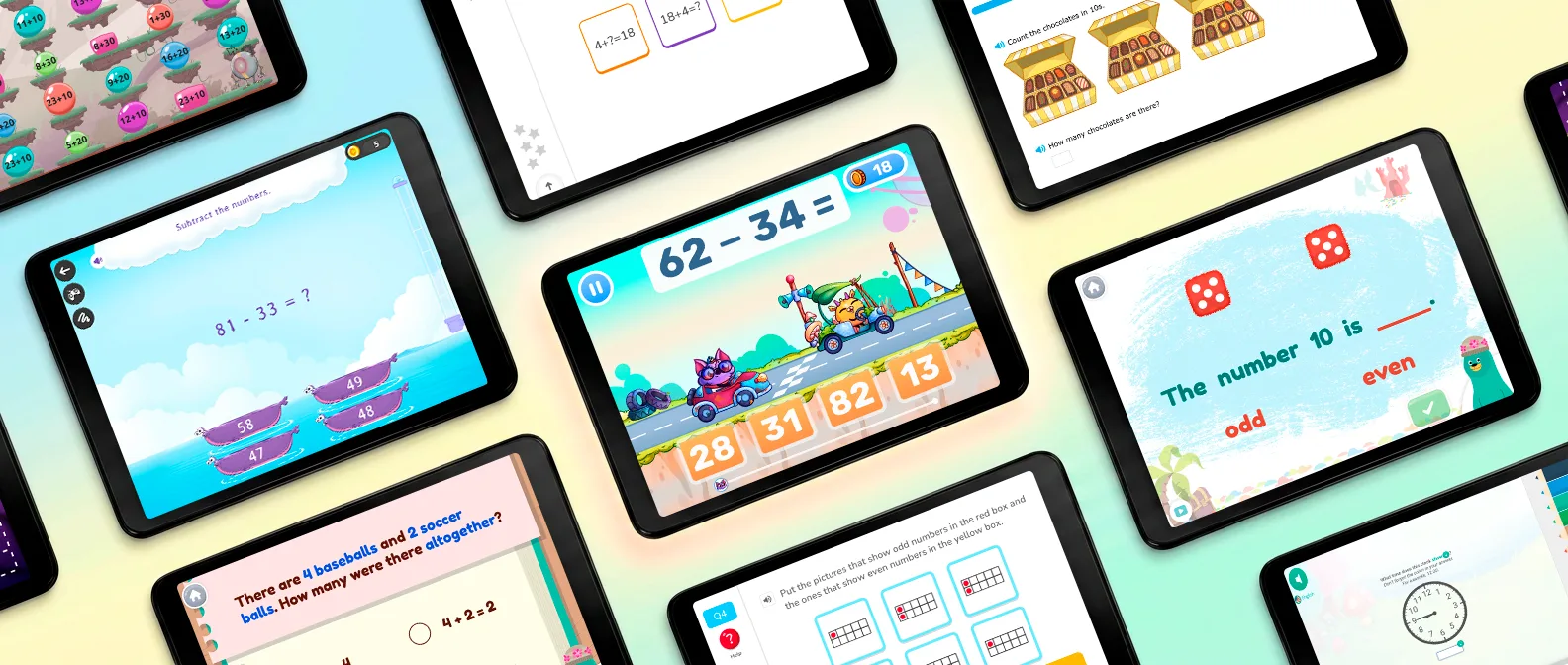
The worksheet comes home at the bottom of the backpack, folded into quarters. Twenty addition facts, eleven of them done, and a smiley face from the teacher that somehow looks worried. You know your second grader can do 8 + 5. You've watched them get there. It just takes six seconds, two fingers and a whispered count.
That gap is the whole story of 2nd grade math. Knowing a fact and having it ready are different things. Yet by June, Common Core expects kids to know from memory all sums of two one-digit numbers while they're also adding three-digit numbers and counting coins.
So this list asks three things: Which apps close that gap? Which ones cover the rest of the year? And which math app your kid will still open in week four?
Short answer
MathHero is my top pick for most second graders. It's a story-driven math game where every move runs on addition and subtraction, from facts within 20 all the way to sums within 1000, the fluency spine of the second grade year, and it's free to play at five levels a day. Prodigy Math is the pick for a kid who wants a big fantasy world. Khan Academy Kids and Khan Academy are the strongest free options for everything else, and Math Makers suits a child who wants an unusual, visual way into new ideas.
Full disclosure before the list: I work with MathHero as a math curriculum consultant. That's exactly why the ranking criteria are spelled out below, why MathHero gets a limitation line like every other entry, and why several sections of this guide send you to a different app.
Best math apps for 2nd graders at a glance
| # | App | Best for | Ages or grades | Pricing model |
|---|---|---|---|---|
| 1 | MathHero | Fact fluency your kid asks to practice | Ages 5 to 10 | Free at 5 levels a day; subscription removes the cap |
| 2 | Prodigy Math | A kid who wants a fantasy world | Grades 1 to 8 | Free to play; optional membership adds pets, gear and perks |
| 3 | Khan Academy Kids | Free math and reading in one app | Ages 2 to 8 | Free, no ads, no subscriptions |
| 4 | Khan Academy | A free full 2nd grade course with videos | Kindergarten and up | Free (nonprofit) |
| 5 | Kahoot! Big Numbers by DragonBox | Place value and regrouping | Ages 6 to 9 | Kahoot! Kids subscription with a 7-day free trial |
| 6 | Monster Math | Mental math strategies | K to Grade 3 | Limited free play, then a subscription |
| 7 | Math Makers | An unusual, visual way into new ideas | Ages 5 to 10 | Subscription after a 7-day trial; no free mode |
| 8 | MathTango | Building a monster world with addition and subtraction | K to Grade 5 | Free mode of 5 puzzles a day for 1 profile; subscription for MathTango alone or the whole Piknik bundle |
| 9 | SplashLearn | A big library of short mini-games across many topics | Pre-K to Grade 5 | Family subscription after a 7-day free trial |
| 10 | IXL Math | Standard-by-standard practice | Pre-K to Grade 12 | Subscription; free mode is 10 questions a day |
| 11 | Math Learning Center apps | Free visual models in any browser | Elementary grades | Free (nonprofit) |
Pricing models were checked on the developers' own pages and store listings in September and October 2026. They change often, so confirm before you pay for anything.
How I chose them
Four questions, asked in this order, decided the ranking.
- Will a seven-year-old come back on day 20? Any math app survives the first weekend on novelty. I looked for what keeps pulling a kid back once the shine is gone: a story to finish, a character to dress up, a world that keeps opening, a thrill of getting faster.
- Does it hit 2nd grade math at the right level? Mainly fact fluency within 20 and adding and subtracting within 100 and 1000, with place value, money and time around the edges.
- What does free actually get you? Specifically, whether the free version limits what your child can play, or only how much of it per day.
- How much can you steer, and how much can you see? Topic choice, difficulty, speed, reports.
MathHero comes first because it was built around question one and does well on three and four. It doesn't win question two outright: it covers the core elementary math of second grade, not the clocks, coins, rulers and shapes, and the entries below say which apps do.
What should a 2nd grader be able to do in math?
Mostly add and subtract, faster and with bigger numbers. Common Core names four critical areas for grade 2: extending base-ten notation (853 is 8 hundreds, 5 tens and 3 ones), building fluency with addition and subtraction, using standard units of measure, and describing and analyzing shapes. In practice, over the year a second grader is asked to:
- add and subtract within 20 using mental strategies, and know every sum of two one-digit numbers from memory by the end of the year;
- add and subtract within 100 fluently, and within 1000 using place value;
- use arrays of up to 5 rows and 5 columns to write a total as a sum of equal addends, the groundwork for third grade multiplication;
- tell time to the nearest five minutes and solve word problems with dollar bills, quarters, dimes, nickels and pennies.
Before children learn math facts by heart, they lean on strategies: counting on, making ten (8 + 6 is 8 + 2 + 4), doubles plus one. That's the order the standards lay out, strategies in first grade and recall by the end of second. An app that only drills speed skips the first half. One that only explains skips the second.
Mastering basic math skills this year takes both, so work out which half your kid is missing before you download anything.
The 11 best math apps for 2nd graders
1. MathHero, best overall for 2nd grade fact fluency
MathHero drops your kid into a world overrun by slimes. There are animals to rescue, things to build, races to run, and battles to win. The only way to do any of it is to answer. Answer 9 + 7 and your hero swings. Answer 64 minus 30 and the race keeps moving. A wrong answer costs little, and play goes on. Nobody in this game says "finish your math facts, then you can play." The facts are how you play. Every level also pays out coins, and your kid spends them on outfits and gear for their own hero, so there's always a reason to come back tomorrow.
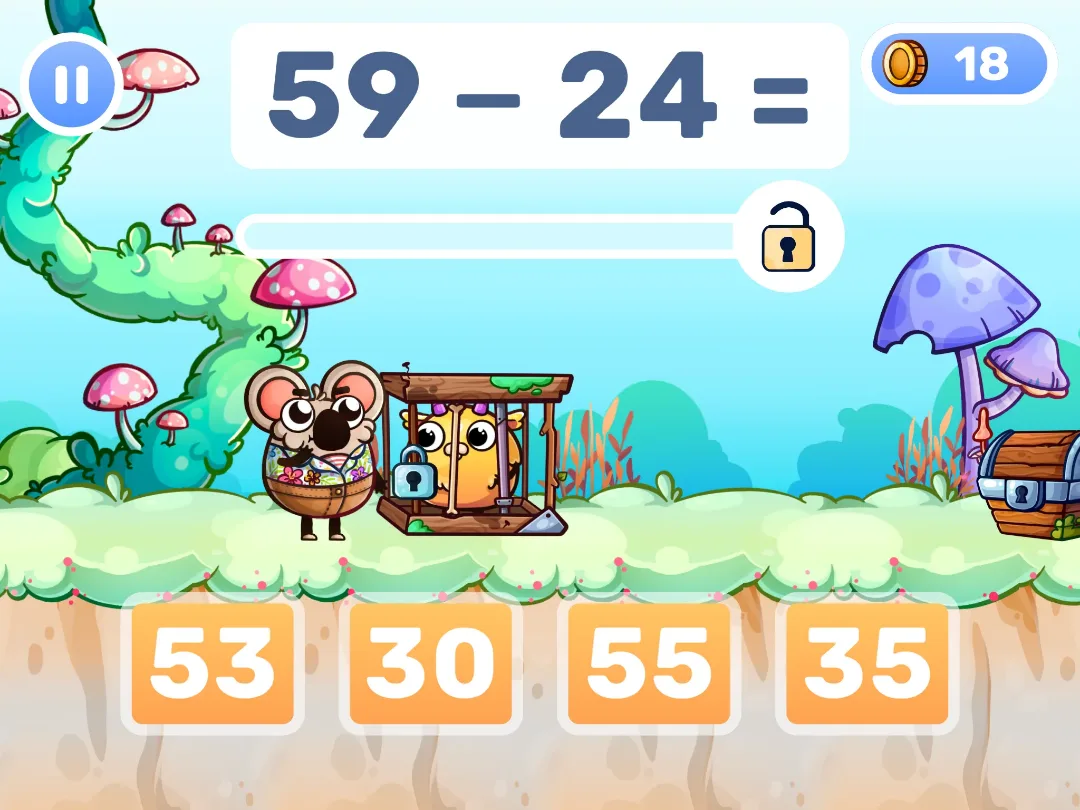
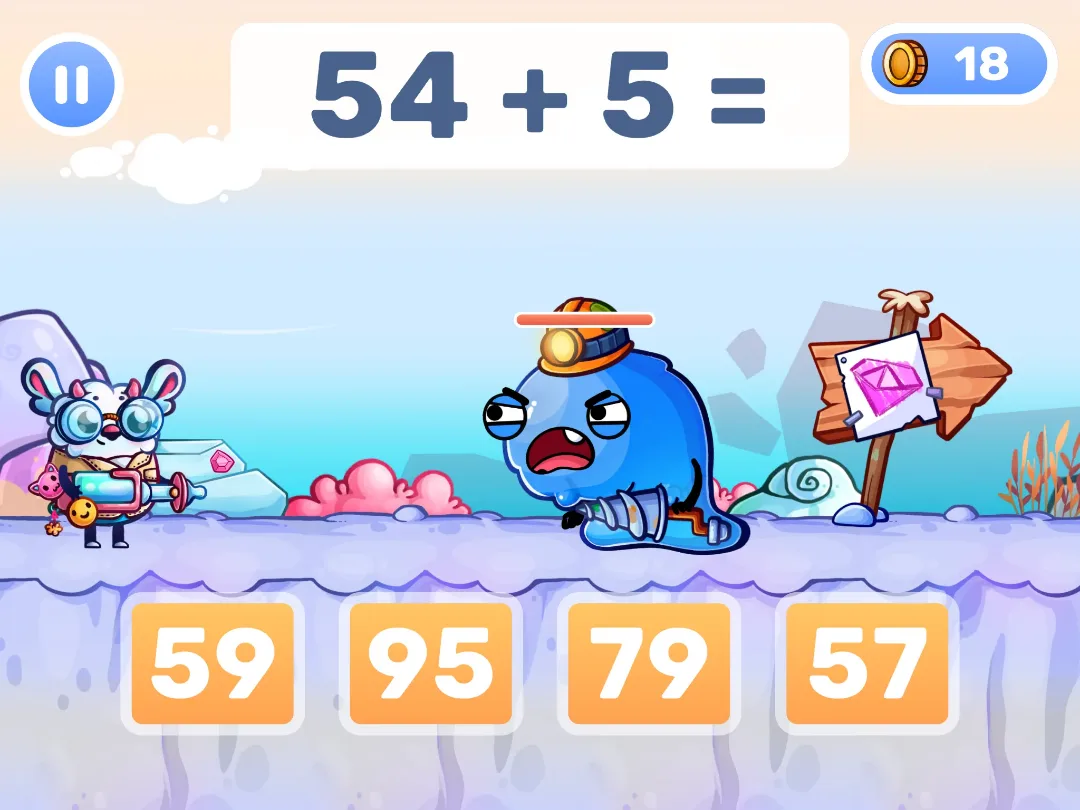
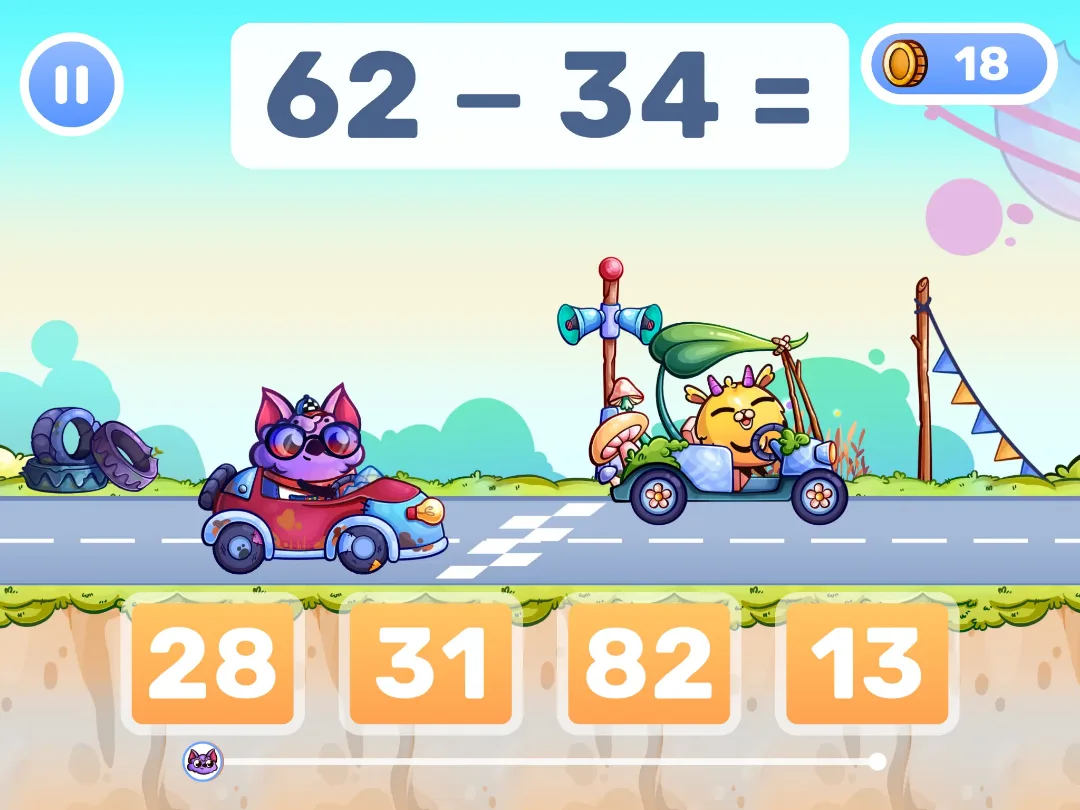
For a second grader, the range lines up with the year. Addition and subtraction within 20 for speed, then within 100, then within 1000: the same ladder the standards climb. It keeps going past it into times tables and division, so a kid who's ready early has somewhere to go, and the same learning adventure carries on through fourth grade.
You set it up once. Pick the topic (subtraction within 20 and nothing else, if that's where the fingers come out), then choose a guided step-by-step path or open practice at a difficulty you set. Slow the monsters down for a kid who freezes under pressure, and speed them up as the facts get automatic.
Switch from multiple choice to typed answers when guessing creeps in. A second grader who's already skip-counting by 5s and 10s can try just the ×2, ×5 and ×10 tables, one table at a time. Each child gets a profile with separate settings and progress, so siblings at different levels can share one tablet.
Parents describe the payoff in plain terms. One wrote: "He's learning without knowing it and getting faster each time." Faster is exactly what second grade facts need. US store ratings: Google Play 4.7 (48k) / App Store 4.6 (12k).
Free here means the whole game. Your kid can finish it without paying, with no locked worlds and no ads. The limit is pace: five levels a day per profile, which is a real daily session for a seven-year-old, not a teaser. A subscription, with a free trial first, removes the daily cap.
Strengths: math that is the gameplay, a hero of their own to dress up, control over topic and speed, per-child profiles, works offline, the whole game free at five levels a day with no ads.
Limitation: core elementary math only. No clocks, coins, rulers, shapes, graphs or word problems, and all of those are part of the 2nd grade year. There are no instructional math videos either, so a new method still needs a teacher or you to introduce it.
Try MathHero free, five levels a day or read the full MathHero review.
2. Prodigy Math, best for a kid who wants a fantasy world
Here your kid builds a wizard, roams an open world, and battles monsters. Every spell costs a correct answer. It's a fantasy-based math game in the full sense: kids answer math questions to win fights and finish quests. By Prodigy's own count, the game spans more than 1,500 skills aligned to curriculum standards for grades 1 to 8, and the questions adapt as students complete battles. A free parent account shows recent activity, curriculum progress, and a monthly report card.
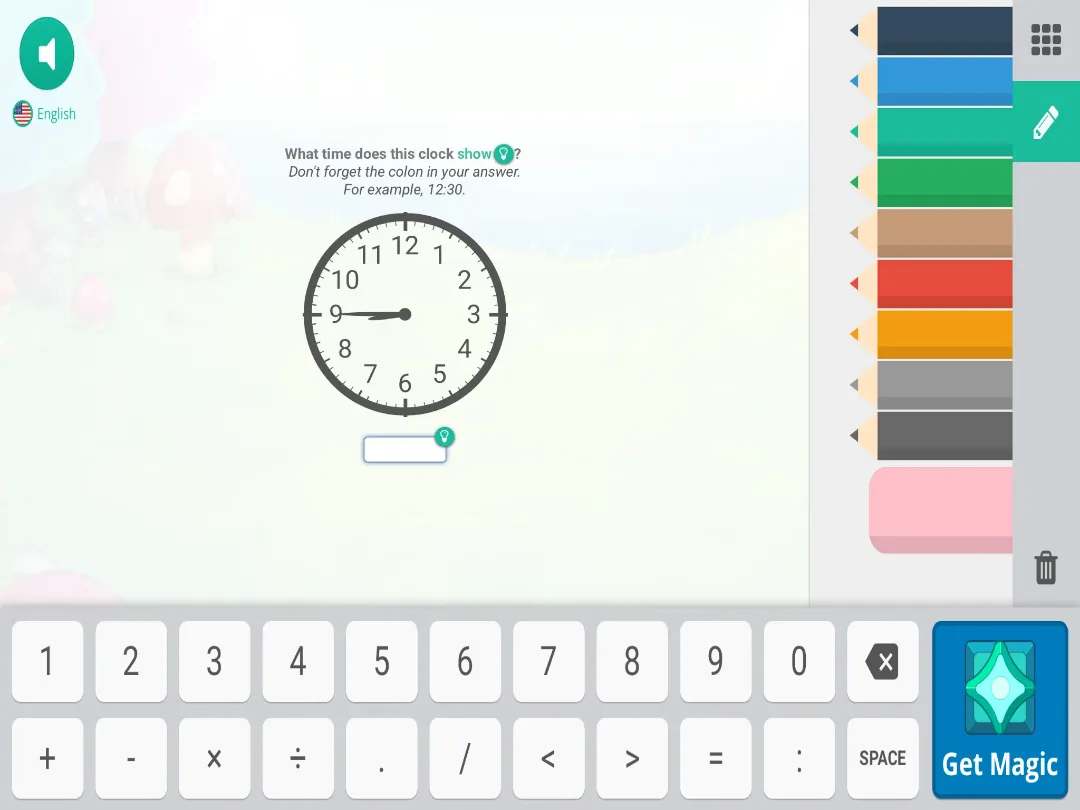
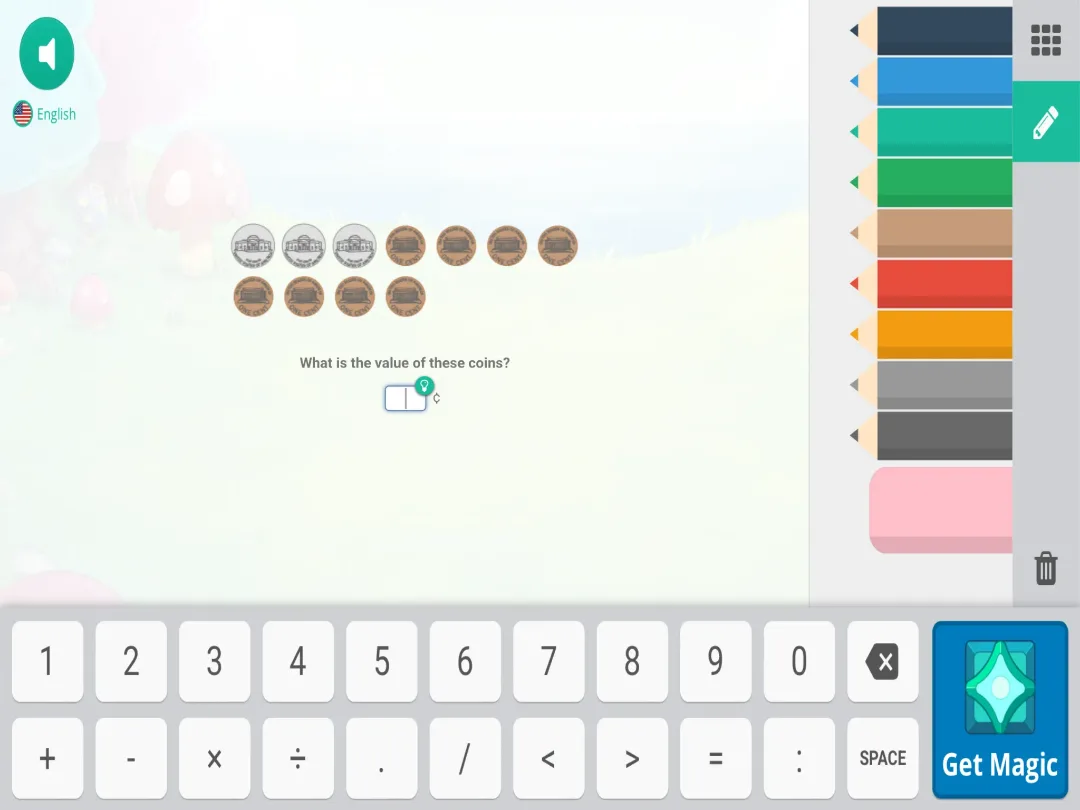
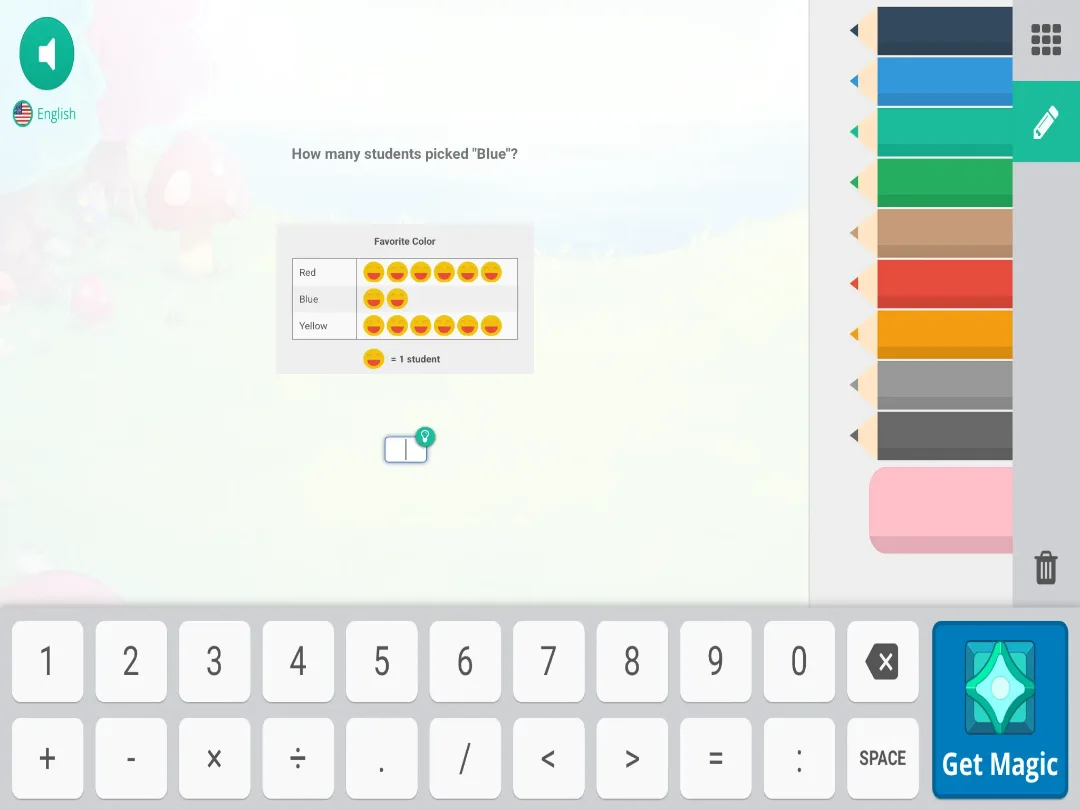
Math itself is free. What costs money is the fun around it: an optional membership adds pets, gear and perks, and free players see those extras along the way. Put simply, some of the rewards that support student engagement cost extra. A bigger catch for second grade is time. Sessions run long, and a good share of each one goes to walking the map and catching pets rather than answering questions.
Strengths: strong pull with kids who resist math drills, adaptive learning across grades 1 to 8, free parent reports.
Limitation: long sessions by design, which makes a ten-minute habit hard to hold, plus regular reminders of what members get.
3. Khan Academy Kids, best free app for math and reading together
When Khan Academy introduced Khan Academy Kids, it brought in the early learning team from Duck Duck Moose, and it shows in the friendly animal guides led by Kodi the Bear and a pace your kid sets. It packs, by its own count, 5,000+ games, books and videos for ages 2 to 8, free with no ads and no subscriptions, aligned with Head Start and Common Core. Math covers counting, addition and shapes, next to reading and language arts, and the 1st and 2nd grade lessons lean toward reading comprehension and problem solving skills.
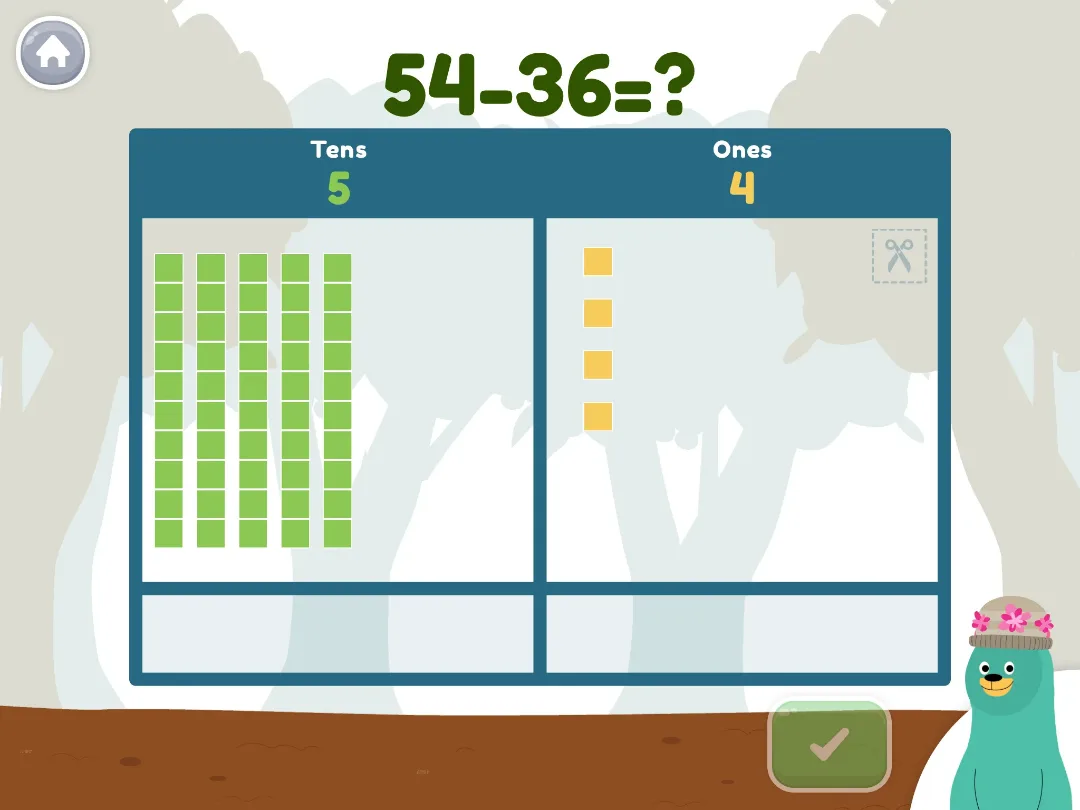
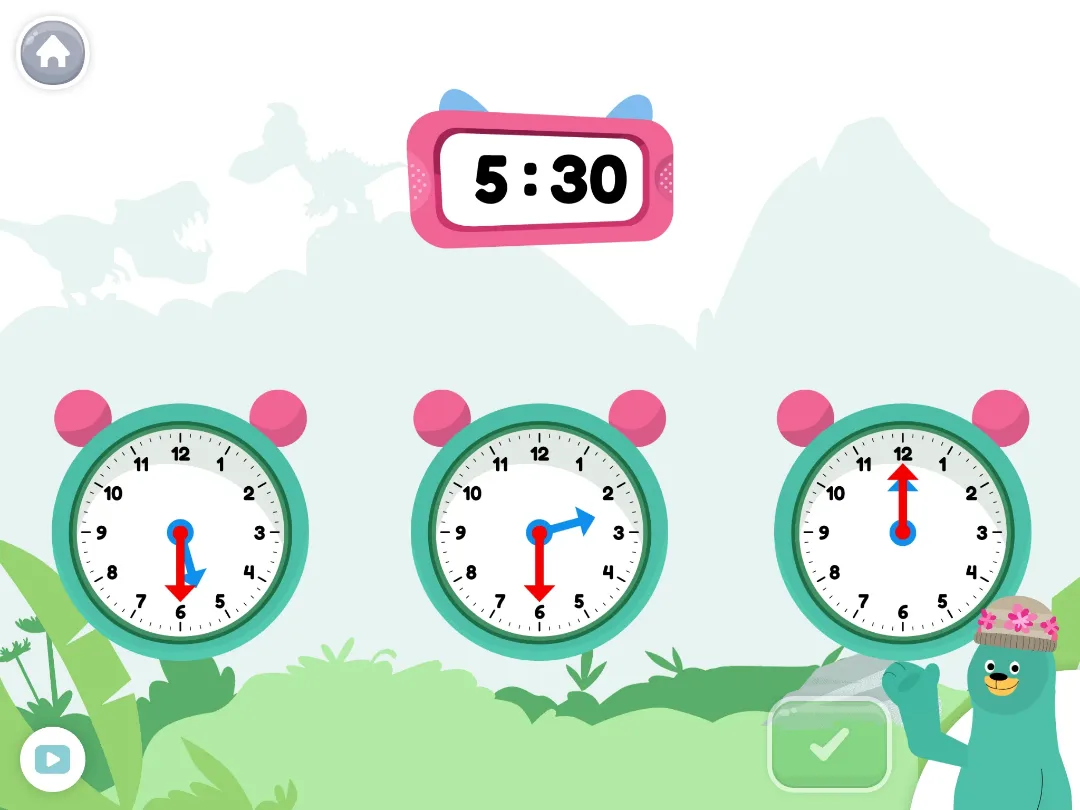
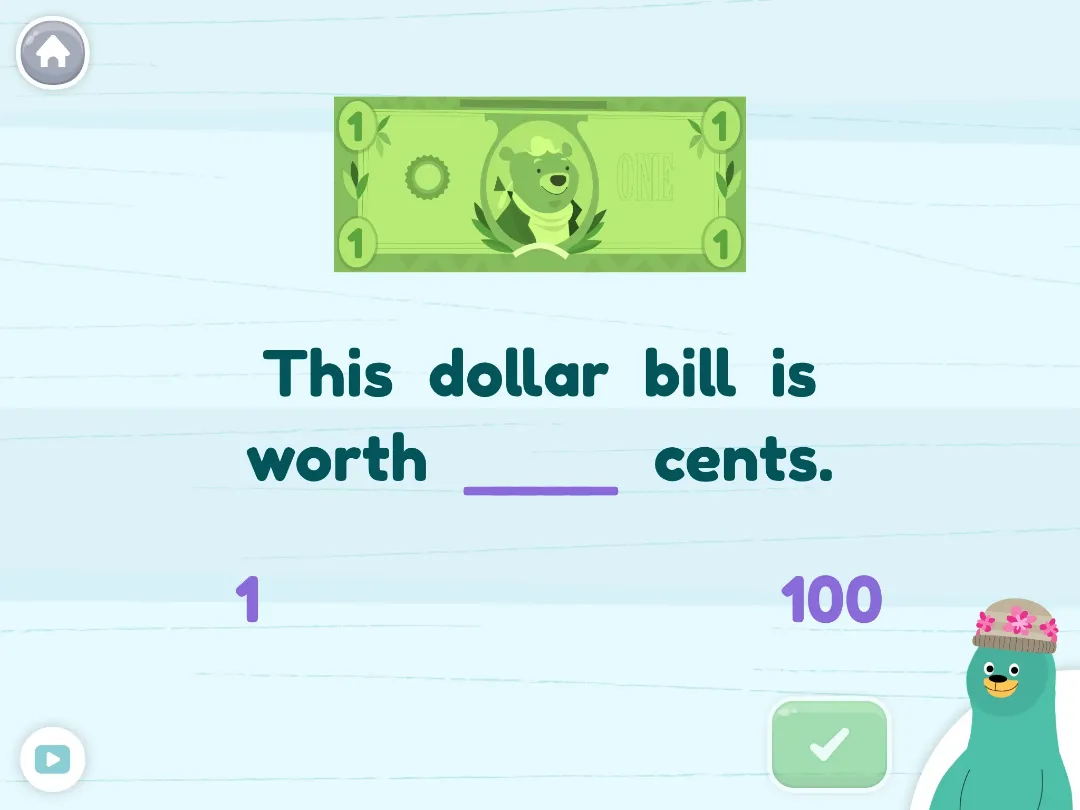
It's built for younger students, from preschool to kids just starting elementary school, and second grade is where it tops out. For a seven-year-old, it's a free way to keep reading and math in one place. The catch is fit: a confident second grader may call it babyish by spring, and fact speed comes slowly in an app that explains rather than drills.
Strengths: free with nothing to buy, math and reading in one app, COPPA-compliant, works offline.
Limitation: second grade is its ceiling, and it's light on fluency practice.
4. Khan Academy, best free full course with videos
This is the grown-up Khan Academy, the same free nonprofit site high school students use for algebra and calculus. Its 2nd grade math course runs in eight units: adding and subtracting within 20, place value, adding and subtracting within 100 and then within 1,000, money and time, measurement, data, and geometry. Units pair instructional math videos with practice, and in the app, a mastery system recommends which skill or video to try next.
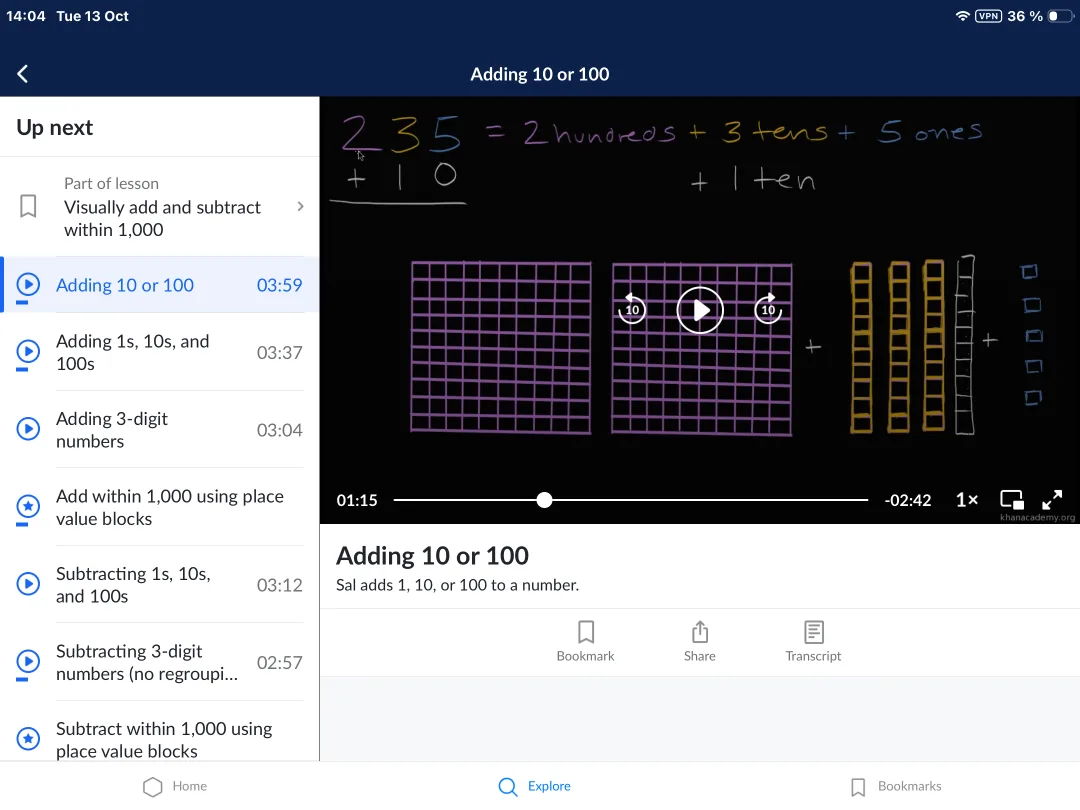
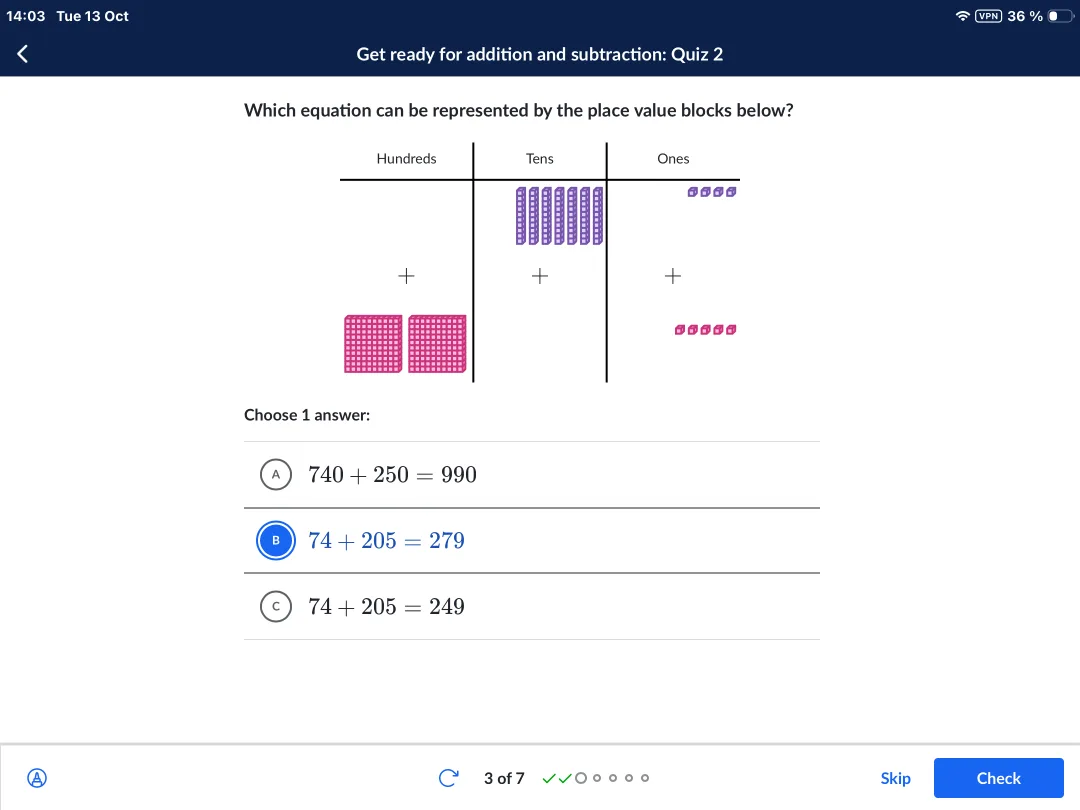
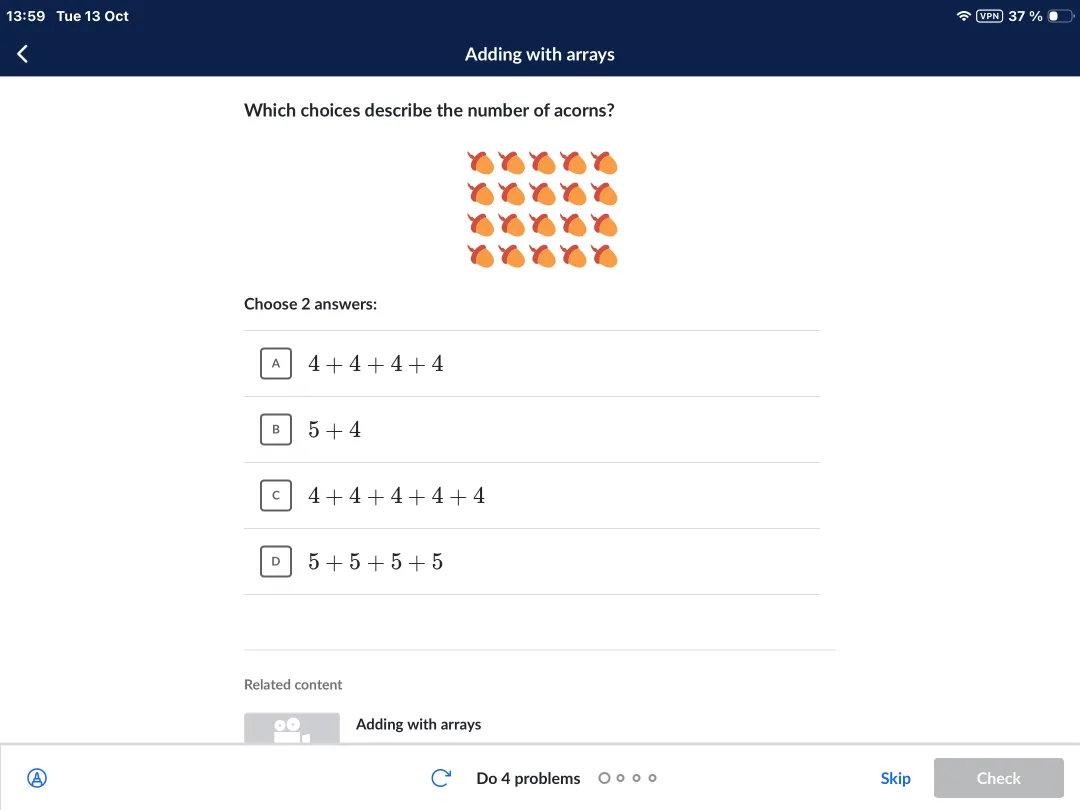
The videos are the reason it's here. A short clip breaks regrouping into easy-to-digest concepts. That is exactly what a kid staring at 52 minus 27 needs. The whole thing runs as a global classroom offering, in its own words, a free, world-class education for anyone, anywhere. It's also self-paced learning at its plainest: no story, no character, just the next exercise. Most second graders need you beside them for it, and the parent tools live on the website rather than in the app.
Strengths: a free full 2nd grade curriculum, videos alongside the exercises, a mastery system that points to the next skill.
Limitation: little built-in motivation for a young child, so it works best with an adult nearby.
5. Kahoot! Big Numbers by DragonBox, best for place value and regrouping
Place value is a quiet heavyweight of second grade, and this app makes it visible. Kids gather and trade resources in a world called Noomia, and every trade is an addition or subtraction with bigger and bigger numbers. Along the way, they learn how the base-ten system works and how to do long addition and subtraction, with no reading required. Kahoot! recommends it for ages 6 to 9.
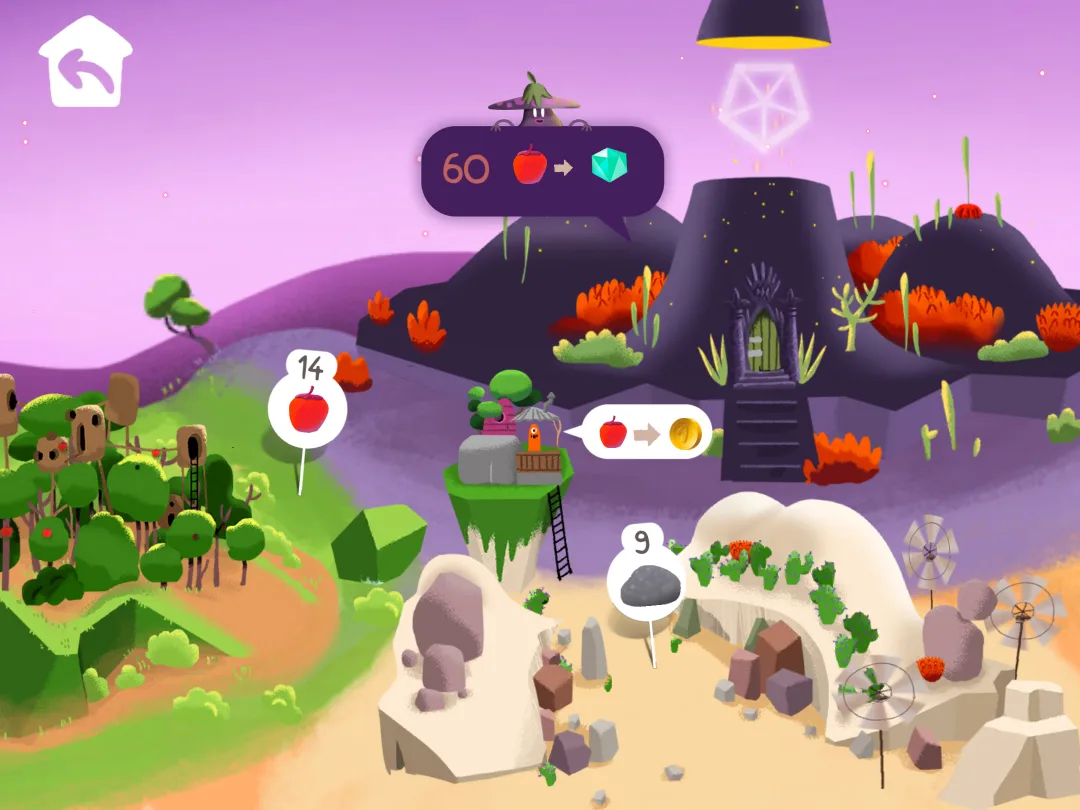
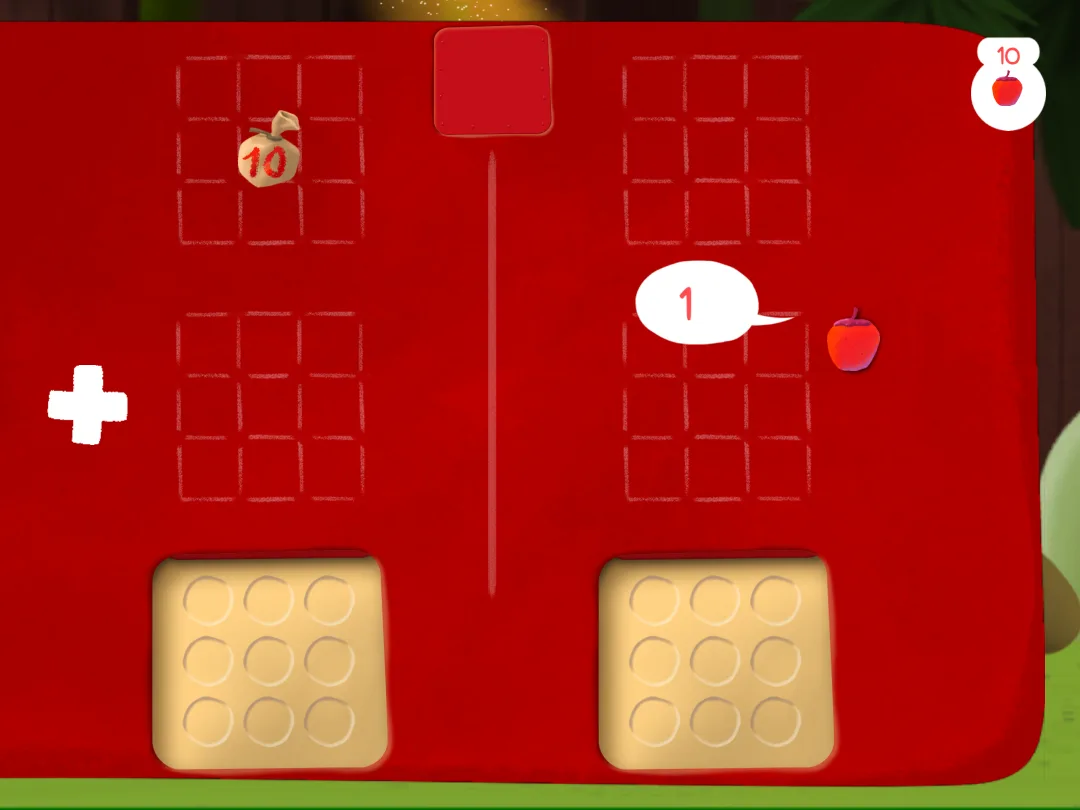
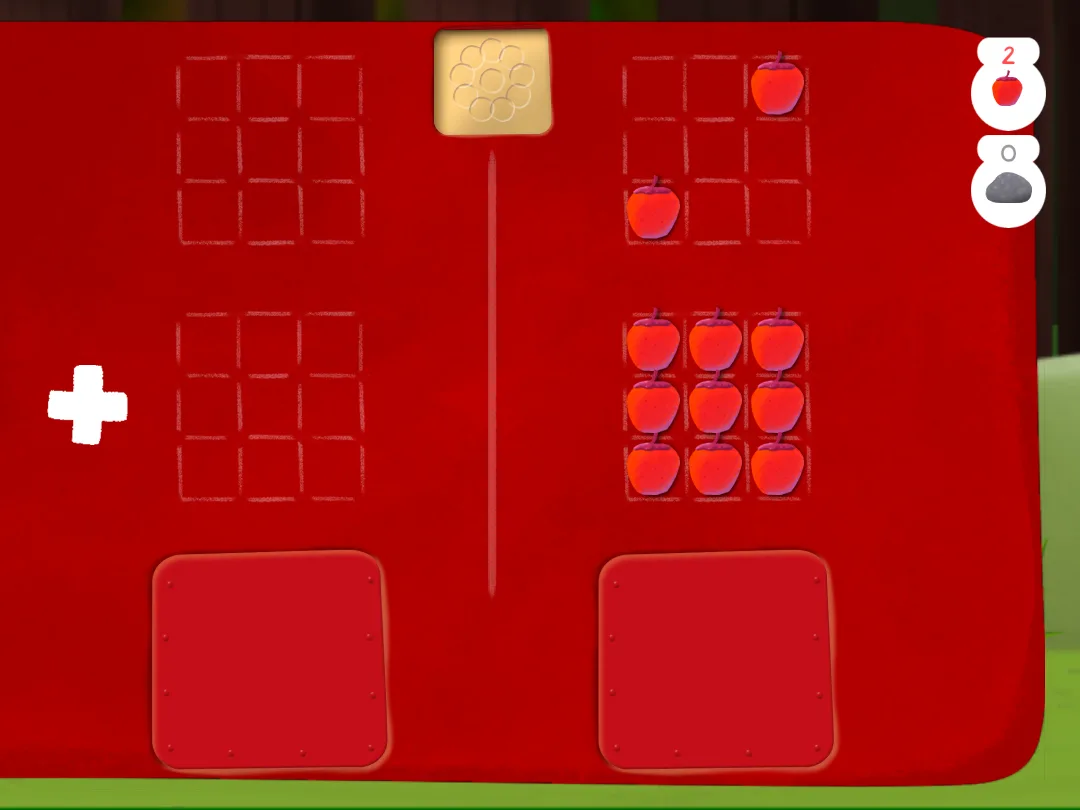
It needs a Kahoot! Kids subscription that starts with a 7-day free trial. It also ends: the listing describes over 10 hours of gameplay, so treat it as a unit on place value, not a year-long habit.
Strengths: the clearest picture of regrouping on this list, no reading needed, math concepts before procedures.
Limitation: subscription only, and a determined kid can finish it.
6. Monster Math, best for mental math strategies
"Monster Math: Kids Fun Games" by Makkajai is a math facts app for roughly K-3: addition and subtraction within 20 and beyond, then multiplication and division. It teaches strategies rather than only drilling facts, for example breaking a number apart so 8 + 7 becomes 8 + 2 + 5. That fits the second grade move from strategies to recall.
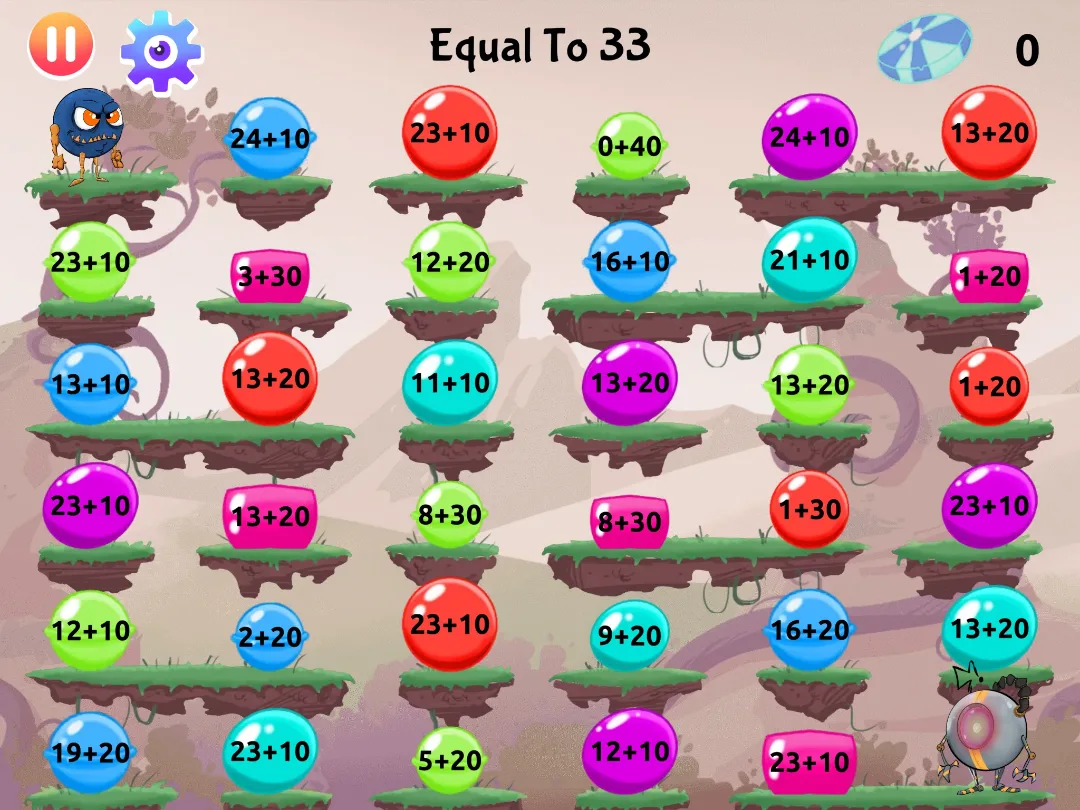
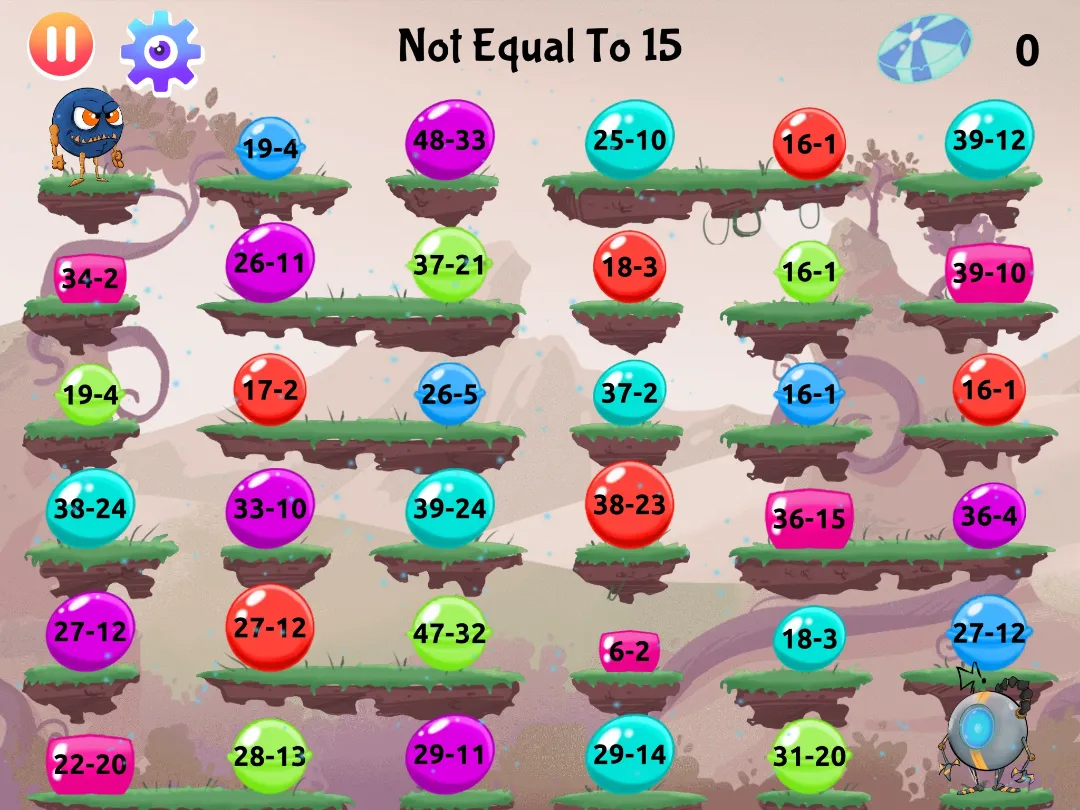
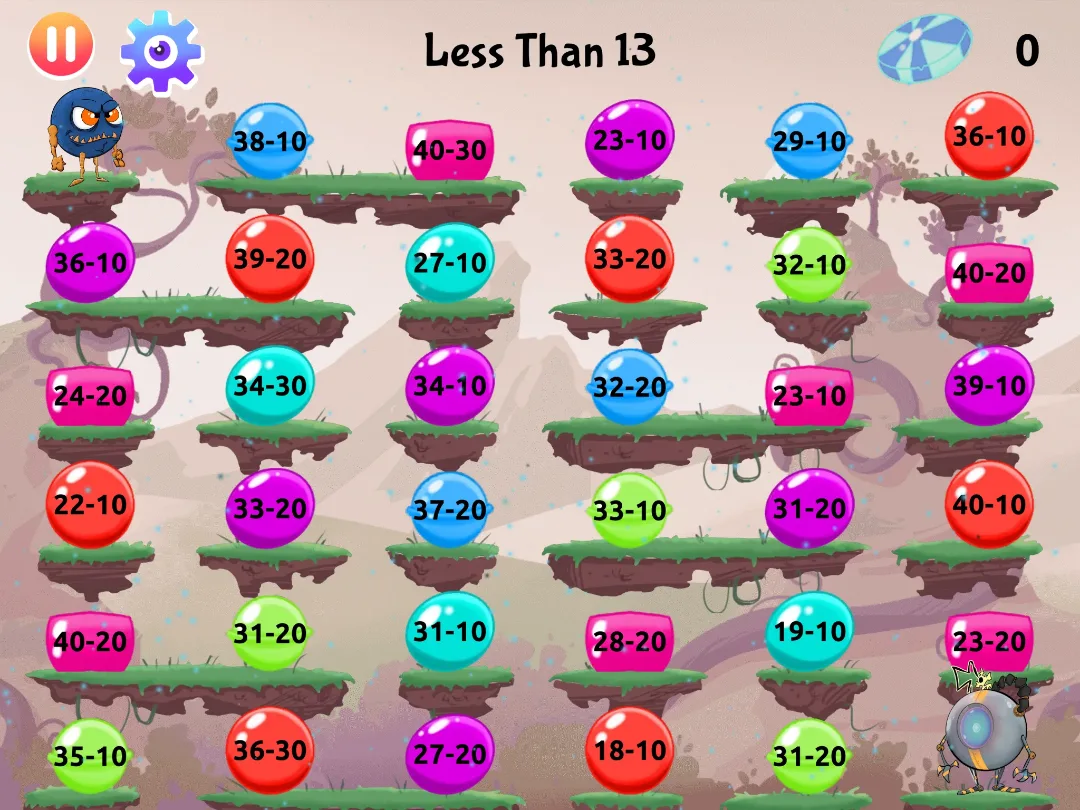
The app gathers the publisher's earlier standalone games into one menu (a campaign with the hero Maxx, Math Bridges, Math Balance and others), each with its own hero and its own look.
The app offers exact topics tailored to each individual user. To try different learning styles and reduce pressure, parents can choose to turn the gameplay timer on or off. The app also works offline and there are zero ads.
Monster Math's pricing model allows for a limited amount of free play before requiring a paid subscription to unlock unlimited access.
Strengths: explicit strategy work, deep per-child topic settings, works offline.
Limitation: the modes don't connect into one game or story.
7. Math Makers, best for an unusual, visual way into new ideas
Math Makers is a math puzzle game by Ululab, the studio behind Slice Fractions, for ages about 5 to 10. Each level of the game is a small puzzle: the child clears the way for a funny animal by combining, cancelling, grouping or slicing blocks. The math is in those moves, so the child sees what addition and subtraction mean, and multiplication shows up as grouping, ahead of third grade.
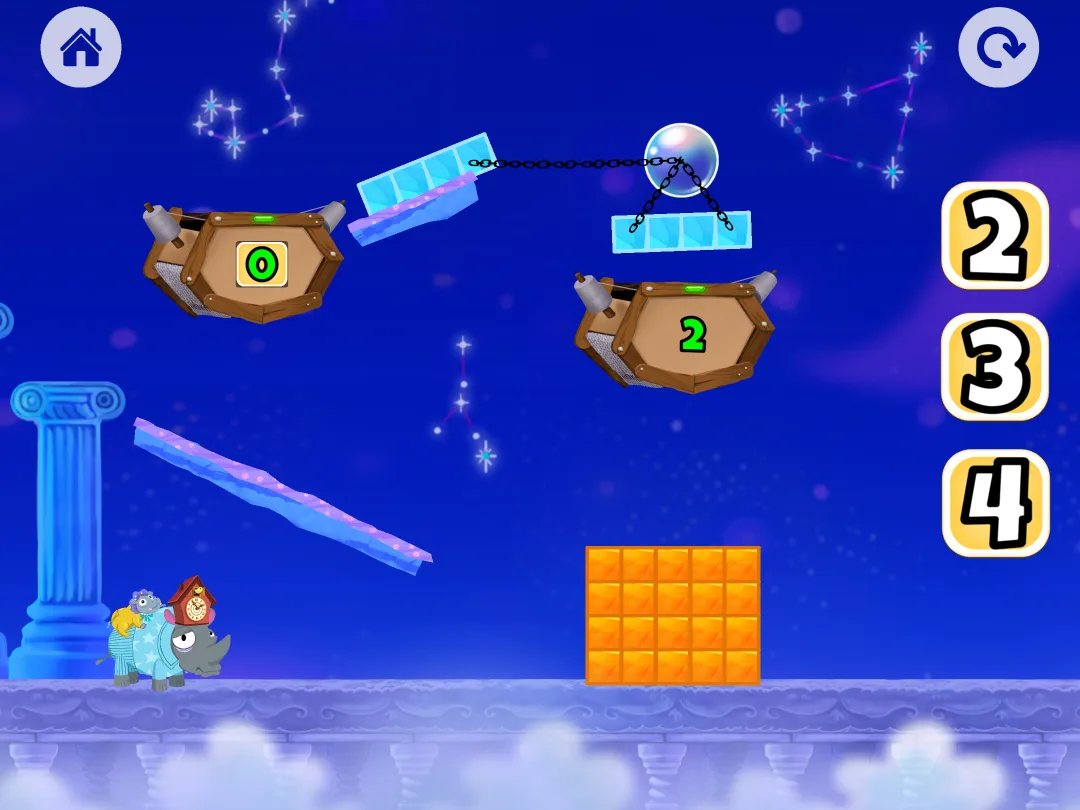
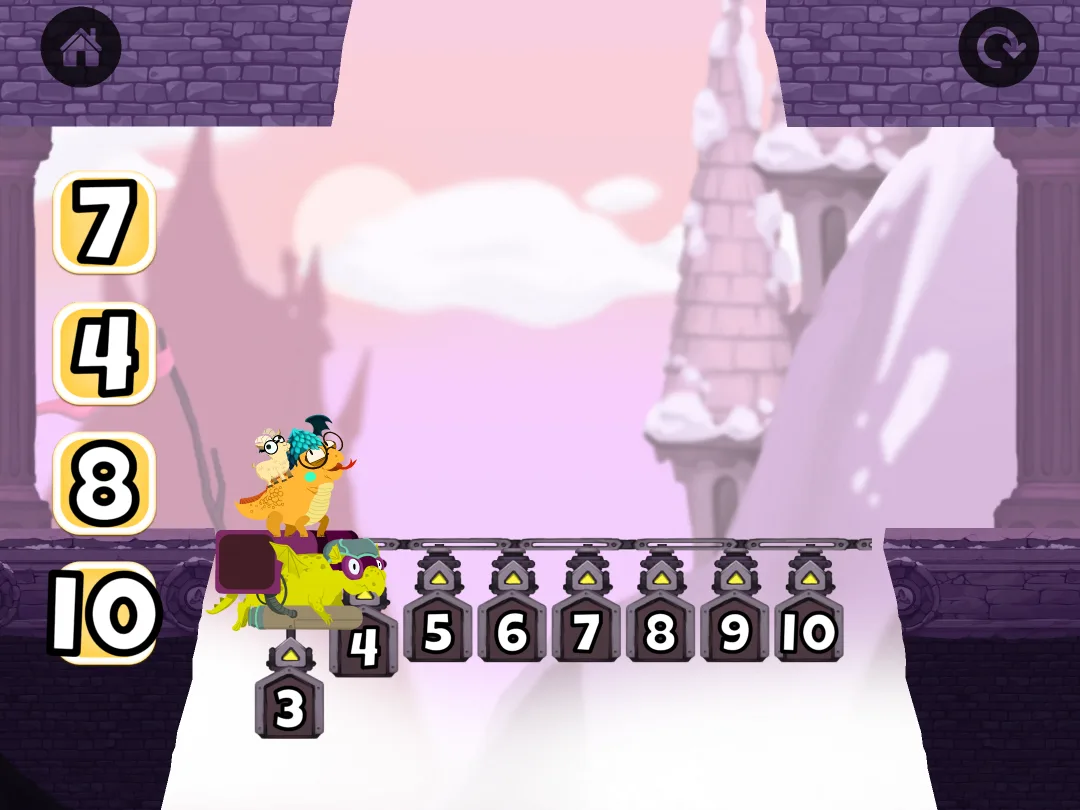
There are no words in the game, and the graphics are bright and funny. The game offers rewards: hats and accessories for the animals, pets to collect, a home base (the Den) to decorate, seasonal events.
The game is subscription only, with a 7-day trial and no free mode. One account covers up to 3 children, and there are no ads.
Strengths: a visual first look at an operation for a child who needs to see an idea to get it, no reading needed, funny graphics.
Limitation: each puzzle uses only a few numbers, so it shows how an operation works more than it makes facts like 7 + 8 automatic; the visual approach clicks for some children, while others solve the puzzle without connecting it to the numbers.
8. MathTango, best for building a monster world with addition and subtraction
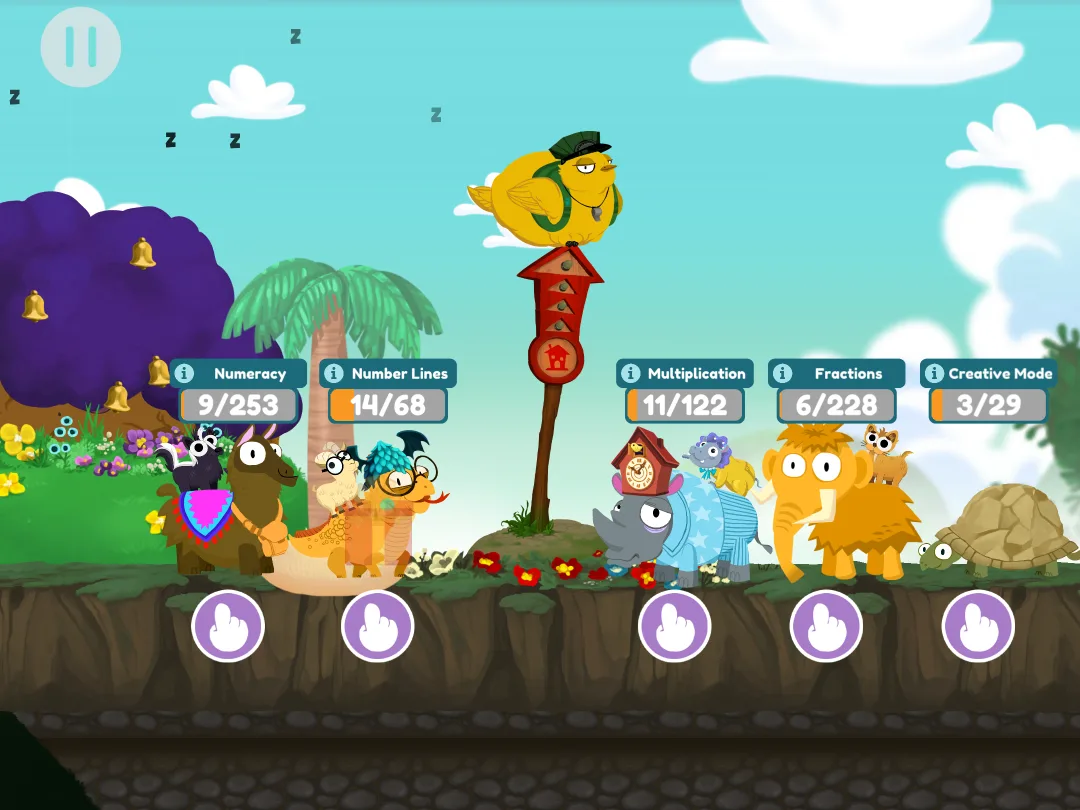
MathTango is a puzzle-and-world-building game from Originator, the makers of Endless Alphabet, distributed through Piknik (the Sago Mini and Toca Boca app bundle). Short puzzles of several types (number tiles in a grid, stacks of blocks, missing numbers) earn monsters and currency for building up the child's island. Addition and subtraction live on the Island; a second world (Starbase) covers multiplication and division.
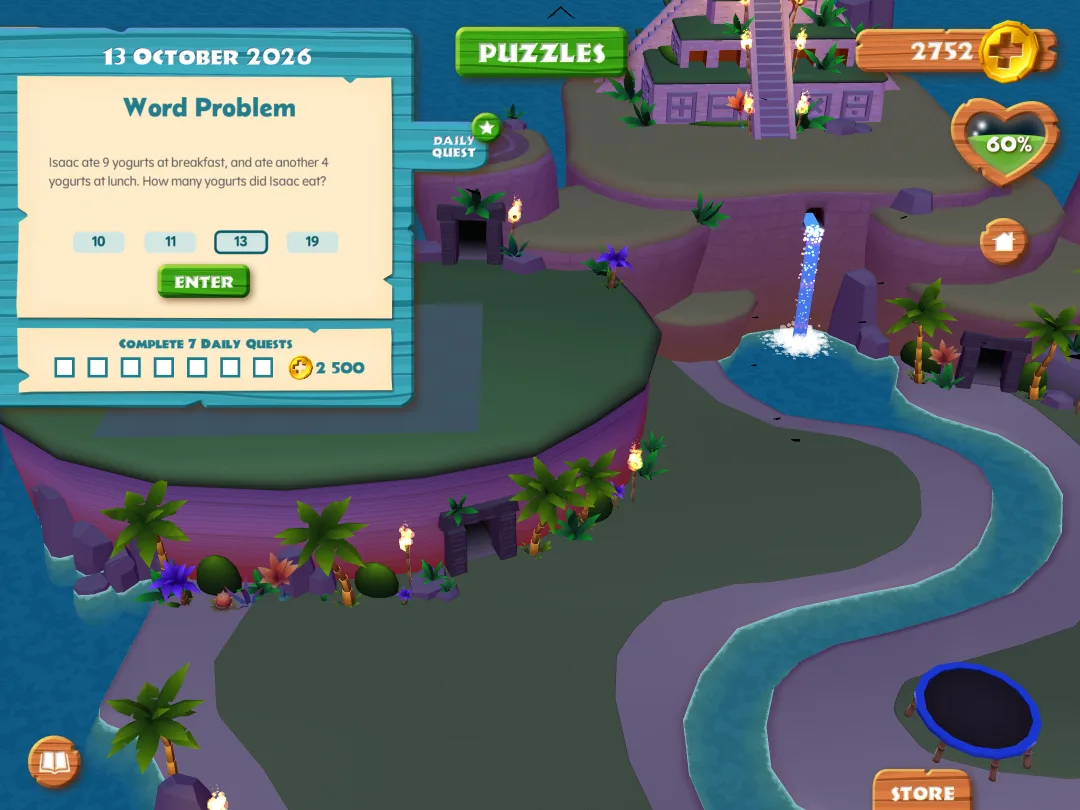
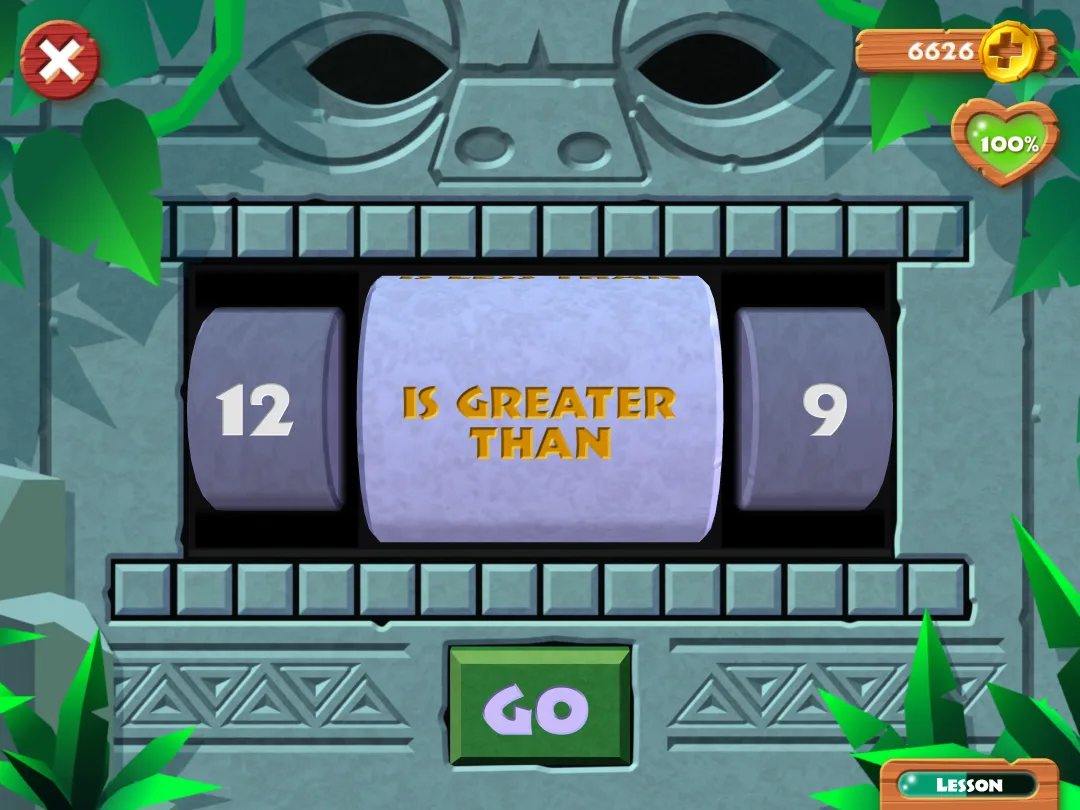

The app automatically customizes a learning path set by the child's age, and it works offline.
The pricing model has a free mode that offers 5 puzzles a day for a single profile. For full access, you can choose a subscription for MathTango alone or the whole Piknik bundle.
Strengths: a monster world kids want to keep building, several puzzle formats for the same facts, a first look at multiplication for kids who are ready.
Limitation: the math sits on separate puzzle screens that pay for the world, with no story pulling the child back; the free mode runs out quickly.
9. SplashLearn, best for a big library of short mini-games
SplashLearn is a kids learning app for Pre-K through Grade 5 in math and reading, and it offers short activities organized by school topics. It is aligned with Common Core and state standards. Each child gets a personalized learning path, and parents get progress tracking.
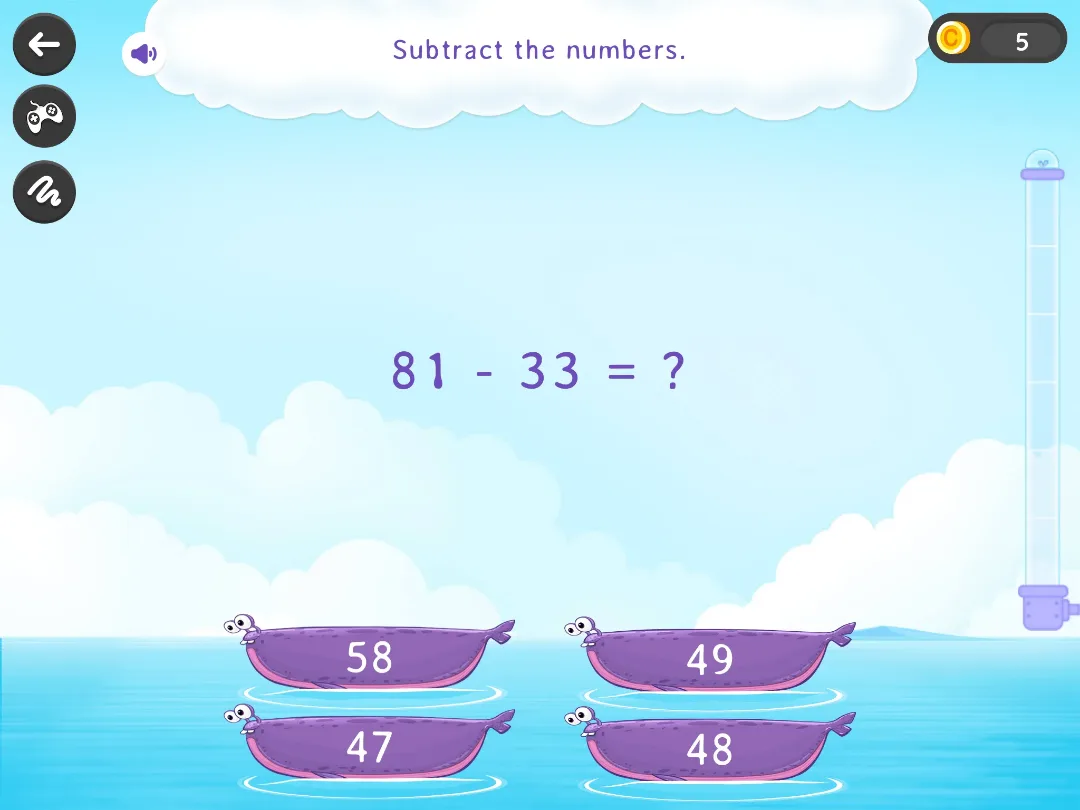
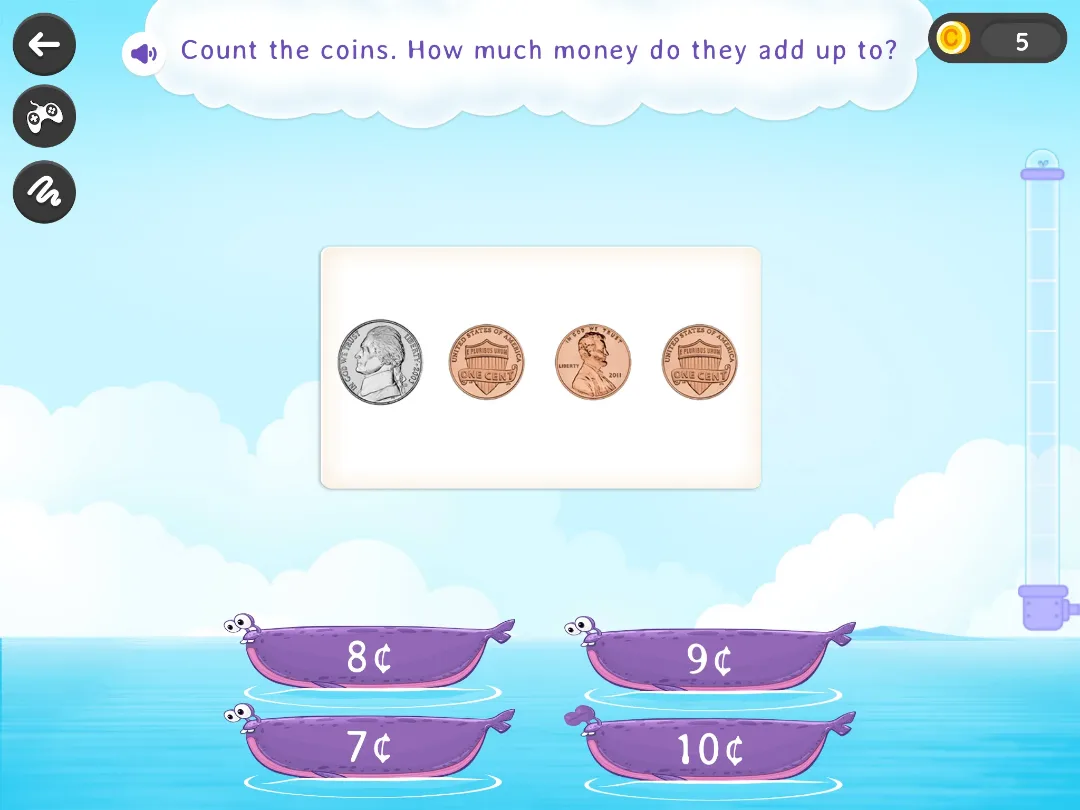
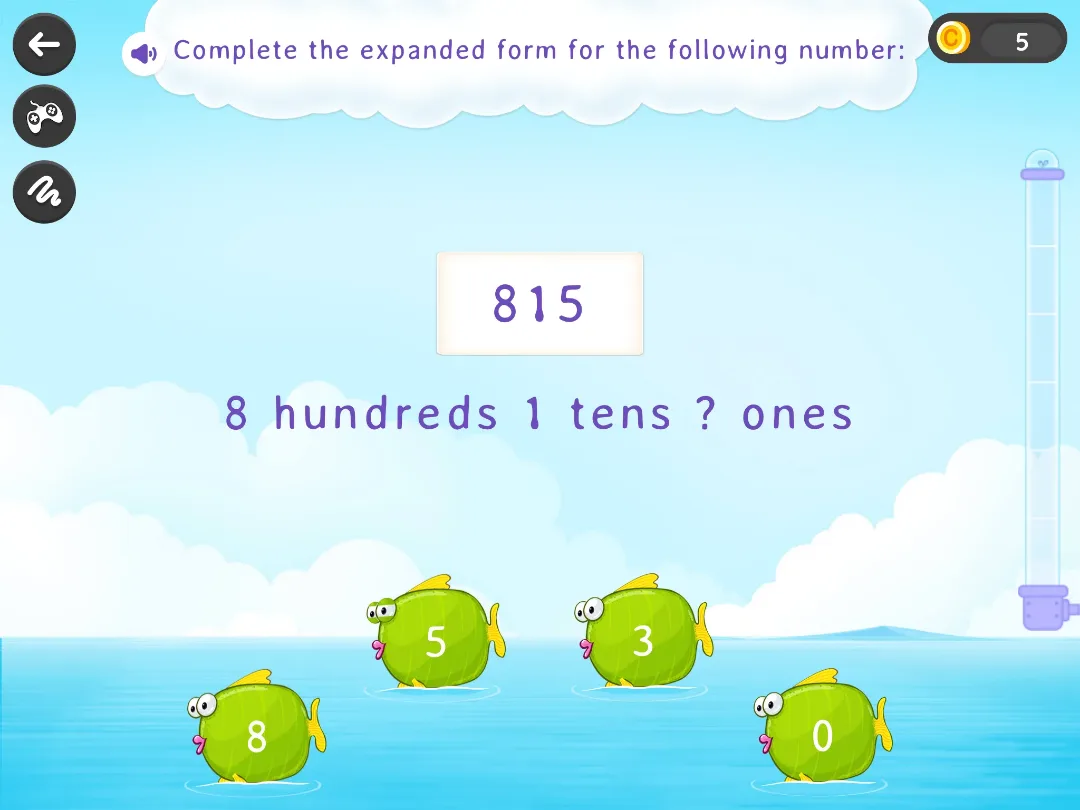
Keep your kid on the path. Turned loose in the menus of math games, a seven-year-old picks whatever looks shiniest and skips whatever's hard. On the path, it encourages self-paced learning without you choosing every activity. Pricing model: a family subscription after a 7-day free trial.
Strengths: short activities organized by school topics, a personalized learning path, parent reports.
Limitation: mostly exercises with a game skin and rewards on top; busy screens a child can wander through; most content needs a subscription.
10. IXL Math, best alongside school
IXL is practice with the game taken out. One question, one answer box, one score that climbs as your kid gets things right. It lists hundreds of second grade math skills, from one-digit addition strategies to three-digit subtraction and money, with skills mapped to the Common Core 2nd grade standards.
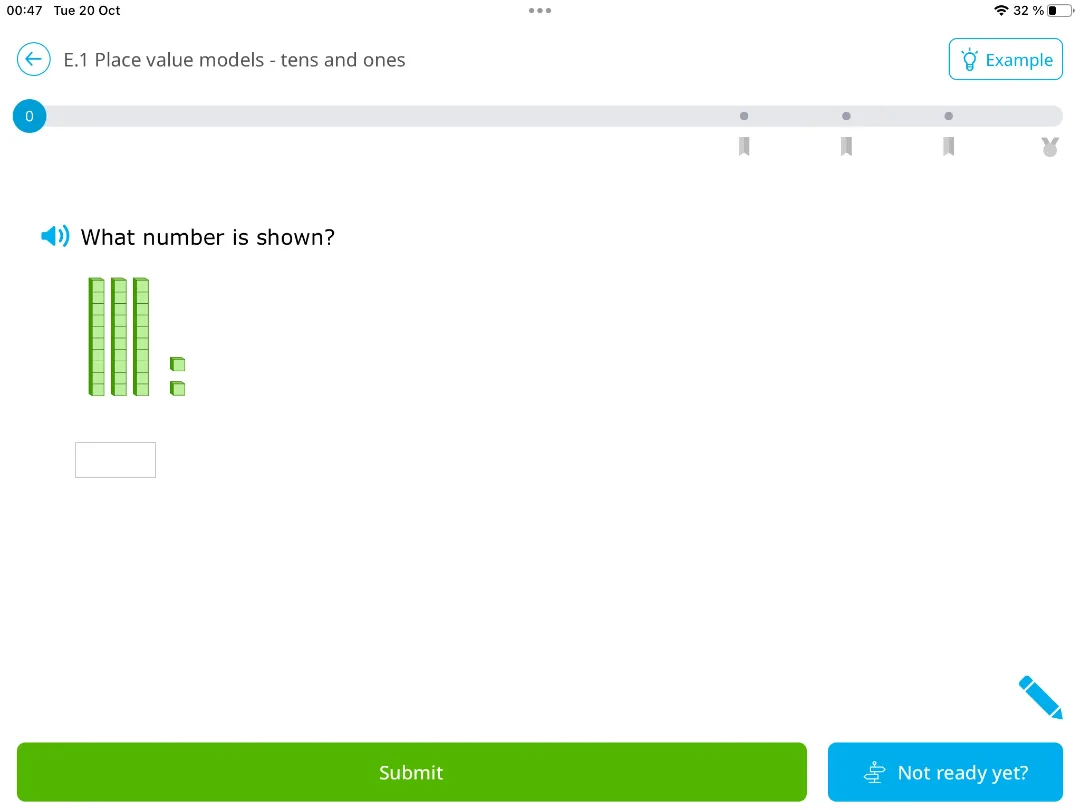
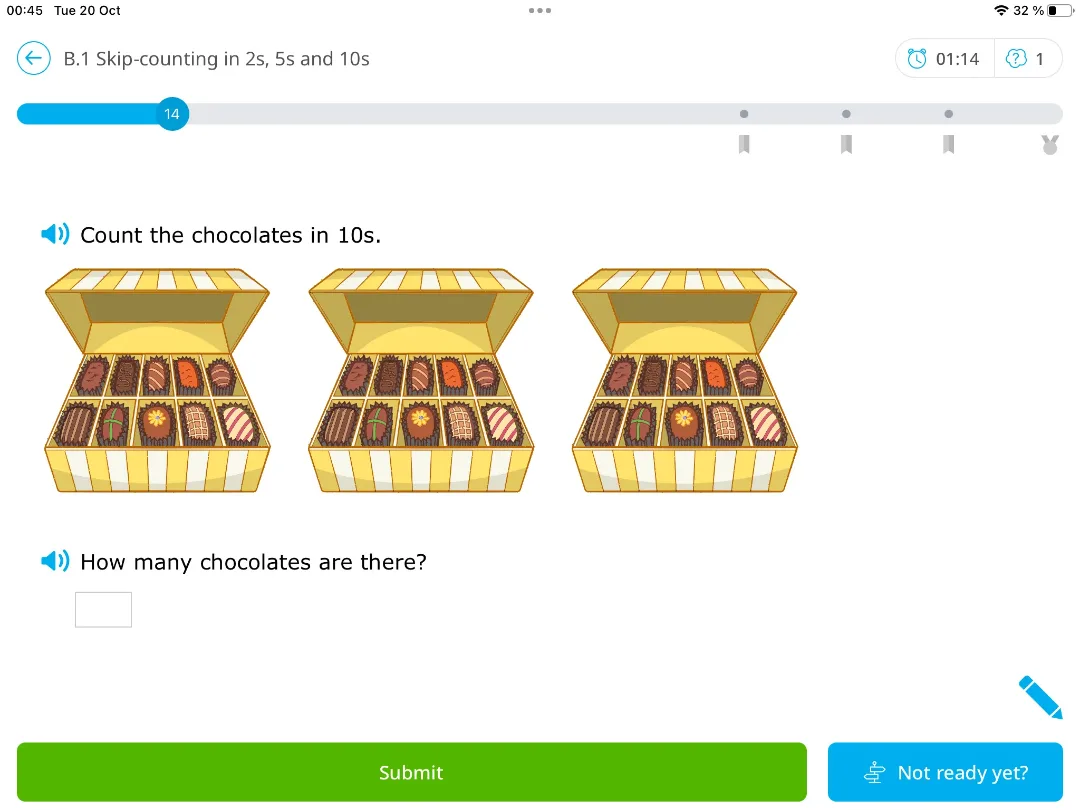
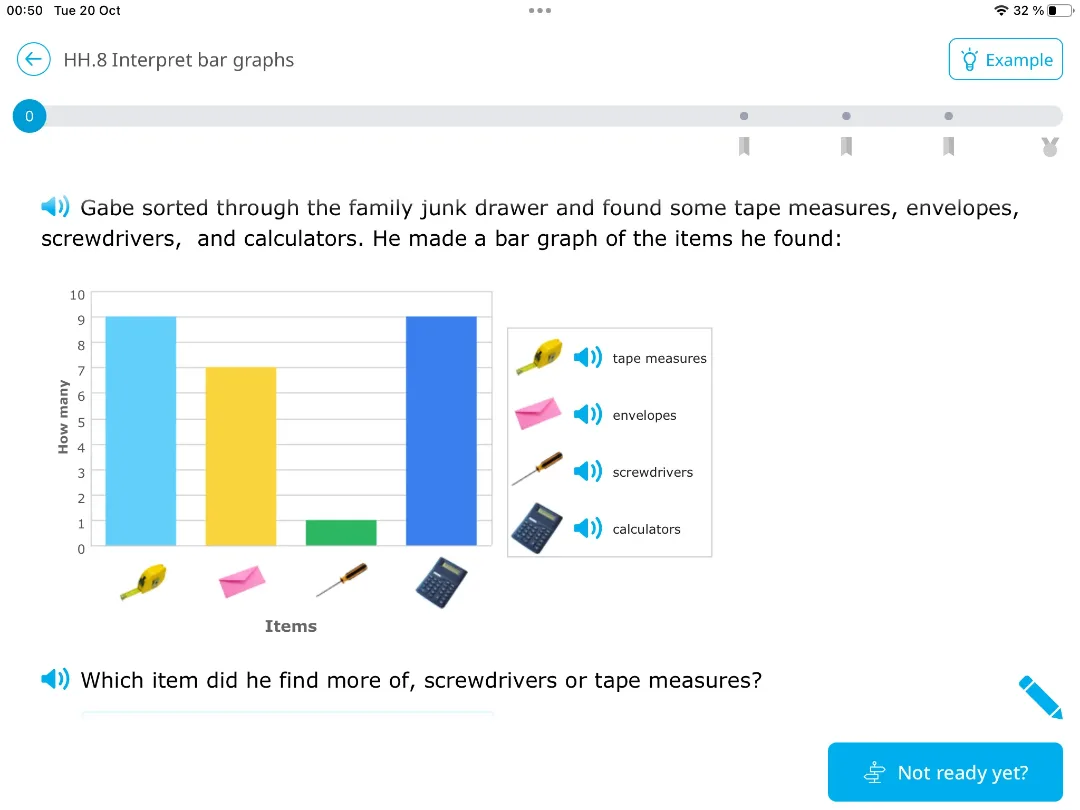
The same account carries elementary school practice all the way to 12th grade. A wrong answer brings up a worked explanation, one of the clearest on this list. Free use is 10 questions a day; after that it's a subscription.
The score is the catch for a seven-year-old. It rises fast, slows near the top, and drops after a late miss, which is right where a lot of kids quit. Use IXL for targeted math exercises on one skill, or for gifted students working above grade level. Add a math app your kid opens without being asked.
Strengths: full standards coverage, clear explanations after mistakes, room to work ahead.
Limitation: nothing pulls a young child back tomorrow, and the scoring punishes late mistakes.
11. The Math Learning Center apps, best free visual models
These are free virtual manipulatives that run in any modern browser and on iPad, from a nonprofit that has worked in K-12 education since 1976. Several fit second grade exactly: Number Pieces for ones, tens and hundreds, Money Pieces for U.S. coins and bills, Math Clock for telling time, and Number Line for showing jumps like 38 + 25.
There's no game and no score. That's the limit and also the point. When your kid is stuck on why 52 minus 27 needs a trade, breaking a ten into ten ones on screen does more than another round of practice.
Strengths: free, visual, built on the same models as the Bridges in Mathematics curriculum.
Limitation: tools, not a game, so they need you or a teacher alongside.
Also screened: why these didn't make the list
Eleven more came up in other math apps roundups or were close calls. For younger or older kids, my list of the best math apps for kids covers preschool through middle school.
- Moose Math is a free, gentle warm-up; kindergarten level.
- Operation Math creates spy missions against the clock, with selectable math operations and no ads or in-app purchases. Agents in Operation Math earn watches and uniforms as they go. The countdown is why it sits here: under a timer, some seven-year-olds stop thinking and start guessing.
- Motion Math games now live inside i-Ready after Curriculum Associates acquired Motion Math in 2019, so your kid can only get them through a school that uses i-Ready.
- Buzzmath is a math resource broken into grade levels that runs from grade 1 to 8, which puts a second grader near the bottom of its range.
- CK-12 offers free, customizable open educational resources with an AI tutor attached. It's text-heavy and suits confident readers.
- Slice Fractions 1 and 2 are paid puzzle games with no ads or in-app purchases that teach fractions without words, for ages 5 to 12. The first maps to the second grade standards on splitting shapes into equal parts, but most of it is third and fourth-grade fractions, so save it for next year. These are the original fraction puzzles from the studio behind Math Makers: one-time purchases, with no updates since 2018.
- DoodleMath: short adaptive daily exercise sets with detailed progress tracking; a practice tool rather than a game.
- Marble Math Junior: mazes that also cover money and time, but not updated since 2019 and no longer on Google Play.
- Elephant Learning: an adaptive program with live coaching for fast catch-up, priced like tutoring rather than an app.
- Mathseeds: short lessons for ages 3 to 9, from first counting to about a third grade level; most useful for filling early gaps.
- Zearn: free full second grade curriculum, browser only.
Which app fits your second grader?
Start from the problem you're seeing at the kitchen table, not from the app store's top chart.
Fingers still come out for 8 + 5
MathHero, set to addition within 20 with multiple choice on Easy difficulty, then tighten the settings as answers get quicker. If strategies like making ten haven't clicked yet, add a few minutes with the Number Line app or Khan Academy Kids first.
Facts are solid, but 300 + 47 falls apart
That's place value, not facts. Kahoot! Big Numbers by DragonBox and the Number Pieces app show what a hundred and a ten really are, and Khan Academy's place value unit adds the explanation.
Math homework ends in a standoff
Pick one of the math games where math is the game, not the price of admission: MathHero or Prodigy Math. MathHero for short, ad-free sessions on the facts; Prodigy if your kid wants a huge world and you can live with the upsell. For now, the goal is keeping math fun enough that practice happens at all. For the homework itself, see how to help with math homework.
You want money, time and the rest covered too
SplashLearn if you want a large library of mini games in many topics, Khan Academy if you don't want to pay, Money Pieces and Math Clock as good extras for coins and clocks.
You don't want to spend anything
Khan Academy Kids, Khan Academy and the nonprofit manipulatives above cost nothing. MathHero at five levels a day covers daily fact practice, and IXL gives 10 free questions a day. That's a full free math app kit for second grade.
Two kids, two levels
MathHero keeps a separate profile, settings and progress for each child (free daily limit applies per profile). Your second grader can work on subtraction within 100 while a fourth-grade sibling works on division, on the same tablet.
Do math apps actually help second graders?
A math app can help, as practice alongside teaching, and the research is fairly specific about where. A 2021 meta-analysis of 36 rigorous studies of apps for children from preschool through grade 3 found a positive average effect on math and literacy. The authors' evidence brief adds three details worth knowing: effects were larger for "constrained" skills that grow quickly and then top out, larger on researcher-made tests than on standardized ones, and not systematically tied to how long kids spent in the app.
Here's how I read that for second grade, and it's my reading, not the authors'. Facts within 20 are about as constrained as math skills get: once every sum is memorized, that job is finished. That's the kind of target apps handled best in the data. And since minutes weren't the lever, a short daily session is a sensible plan.
Quality varies a lot, though. When researchers scored 124 popular "educational" apps on four pillars of learning (active thinking, engagement, meaningful content, social interaction), 58% landed in the lower-quality range.
Free apps scored lower on engagement, mostly because of distracting ads and rewards. The authors note their scoring didn't account for an app's target age, so treat it as a warning about app stores in general, not a verdict on any app here.
Then there's how math feels. Math anxiety is already measurable in first and second graders, and in that study it went with lower achievement among children with stronger working memory. A separate study of first and second graders found that kids of math-anxious parents learned less math over the school year, but only when those parents often helped with homework.
Neither study looked at apps. Still, if math makes you tense, handing a daily repetition to something low-pressure and keeping your own role to encouragement is a reasonable move.
How to choose a math app for 2nd grade
Ten minutes in the app store won't tell you much. These checks will, and most take one evening.
- Find the gap first. Ask 8 + 5, 14 minus 6 and 9 + 7 at dinner, and watch whether the answers come or the fingers do. Slow facts call for a fluency app. Quick facts with a shaky 300 + 47 call for place value work. If you're not sure what counts as on track, see Is my child behind in math?
- Match the curriculum and learning goals at school. School curriculums differ, so ask the teacher which particular curriculum the class follows and what's coming this month. The app should supplement class material, not race ahead of it.
- Give it a week, not a day. Every app wins day one. Look at day six.
- Read the free tier like a contract. Does free limit what your child can play, or only how much per day? Does the trial bill automatically when it ends?
- Check the age rating and privacy policy. The Google Play Store age rating, the App Store age band and the app description tell you the intended range. Apps aimed at kids under 13 fall under COPPA, which requires verifiable parental consent before collecting a child's personal information.
- Think twice about competition. Leaderboards and head-to-head math duels thrill some kids and flatten others. You know which kind you have.
- Ask who made the content. When choosing math software, look for questions created by teachers or math content specialists, named on the developer's site. A slick chat window is not the same thing.
A ten-minute routine that survives October
Attach the app to something that happens every day: a drive home, a gap before dinner, a wait at a sibling's practice. A new habit sticks better to an old hook than to a new alarm.
Play the first couple of sessions together and talk about what's on screen. That's the researchers' own advice: the team behind the four pillars study suggests co-playing and connecting what happens in an app to the real world. Ask "How did you get 16?" once, then let it go. After that, move to the next room.
Look at progress every few weeks rather than every night. Look for the learning gaps the dashboard names, not the minutes played. The real test comes some Tuesday in November: does your kid ask for it first? If that never happens, try a different app rather than a stricter rule.
Common questions
What is the best math app for a 2nd grader?
For daily fact practice that a seven-year-old actually asks for, MathHero: a story-driven game built on addition and subtraction within 20, 100 and 1000, free at five levels a day. For the whole year, including money, time and shapes, Khan Academy for free. Prodigy Math suits a kid who wants a big fantasy world.
What is the best educational app for 2nd graders?
It depends on the subjects you want covered. Khan Academy Kids covers math, reading and language arts for free, though second grade is the top of its range. SplashLearn offers a large library of mini games organized by school topics. For math alone, MathHero is my pick for fluency and Khan Academy for a full course with videos.
How can I help my 2nd grader with math?
Find out what's stuck first: slow facts, shaky place value, or topics like money and time. Then keep practice short and daily, about ten minutes, in one app chosen for that job. Ask the teacher which basic math skills the class is working on, so home practice matches school. Away from screens, make change at the store, read clocks out loud and add up prices in the grocery cart.
What is the best free math website for 2nd graders?
Khan Academy. Its 2nd grade course is free, runs in the browser, and covers the whole year with videos and practice. The Math Learning Center's web apps are the best free visual tools, especially for place value, money, and time. MathHero is an app rather than a website, on the App Store and Google Play Store, and it's free to play at five levels a day.
How much time should a 2nd grader spend on a math app?
About ten to fifteen minutes on most days. Spreading practice out beats cramming it, which is why the U.S. Institute of Education Sciences practice guide on organizing study makes spacing learning over time its first recommendation. In a 2021 meta-analysis of learning apps for young children, more minutes didn't reliably mean more learning either.
The bottom line
Second grade is the year facts stop being worked out and start being known. No app does that on its own. The right one just makes ten minutes of practice happen, day after day, without a negotiation. Pick one math app, play the first session together, and notice whose idea the second session is.
When it's theirs, you've found it.
Sources
- Common Core State Standards Initiative. Grade 2 Introduction.
- Common Core State Standards Initiative. Grade 2: Operations and Algebraic Thinking (2.OA.B.2, 2.OA.C.4).
- Common Core State Standards Initiative. Grade 2: Number and Operations in Base Ten (2.NBT.B.5).
- Common Core State Standards Initiative. Standard 2.MD.C.7.
- Common Core State Standards Initiative. Standard 2.MD.C.8.
- Common Core State Standards Initiative. Standard 1.OA.C.6.
- Kim, J., Gilbert, J., Yu, Q., and Gale, C. (2021). Measures Matter: A Meta-Analysis of the Effects of Educational Apps on Preschool to Grade 3 Children's Literacy and Math Skills. AERA Open.
- Harvard READS Lab. Evidence brief on Kim et al. (2021).
- Meyer, M., Zosh, J. M., et al. (2021). How educational are "educational" apps for young children? App store content analysis using the Four Pillars of Learning framework. Journal of Children and Media (PubMed abstract).
- Penn State News (2021). Release on the Four Pillars app study.
- Ramirez, G., Gunderson, E. A., Levine, S. C., and Beilock, S. L. (2013). Math anxiety, working memory, and math achievement in early elementary school. Journal of Cognition and Development (ERIC).
- Maloney, E. A., Ramirez, G., Gunderson, E. A., Levine, S. C., and Beilock, S. L. (2015). Intergenerational Effects of Parents' Math Anxiety on Children's Math Achievement and Anxiety. Psychological Science.
- Institute of Education Sciences. Organizing Instruction and Study to Improve Student Learning (practice guide).
- Federal Trade Commission. Complying with COPPA: Frequently Asked Questions.
- Prodigy Education. Curriculum standards.
- Prodigy Education. Parent account overview.
- Prodigy Education. Memberships.
- Khan Academy Kids. App Store listing.
- Khan Academy. 2nd grade math course.
- Khan Academy. App Store listing.
- Kahoot! Big Numbers: DragonBox. App Store listing.
- Kahoot! DragonBox learning apps.
- Monster Math: Kids Fun Games. App Store listing and Google Play listing.
- Math Makers. App Store listing.
- MathTango. App Store listing.
- SplashLearn. Features for parents.
- SplashLearn: Kids Learning App. App Store listing.
- SplashLearn support. How can parents start a free trial on SplashLearn.
- IXL. Second grade math skills.
- IXL. Common Core second grade math standards.
- IXL. App Store listing.
- The Math Learning Center. Math Apps.
- Number Pieces by MLC. App Store listing.
- Doodle help center. Baseline assessment.
- DoodleLearning. DoodleMath (US).
- DoodleMath. App Store listing.
- Marble Math Junior. App Store listing.
- Elephant Learning. App Store listing (coaching).
- Elephant Learning. Pricing page (plans, reporting, trial).
- Elephant Learning. Homepage (guarantee).
- Elephant Learning. Walkthrough page (Elephant Age).
- Mathseeds. App Store listing.
- Duck Duck Moose. Moose Math, Google Play listing.
- Operation Math Game. App Store listing.
- Curriculum Associates (2019). Learning games press release.
- Buzzmath. Math curriculum.
- CK-12 Foundation. Browse.
- Slice Fractions. App Store listing (Canada).